


Your shopping cart is empty!
Tomato "Odessa"
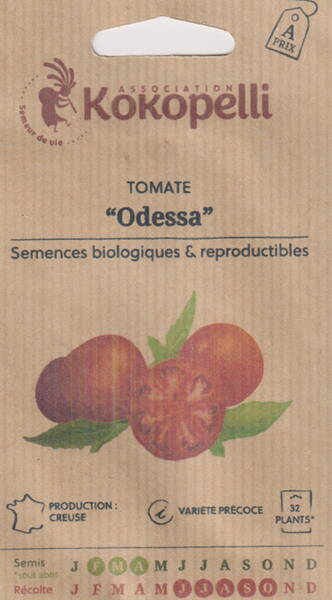
Eco seeds
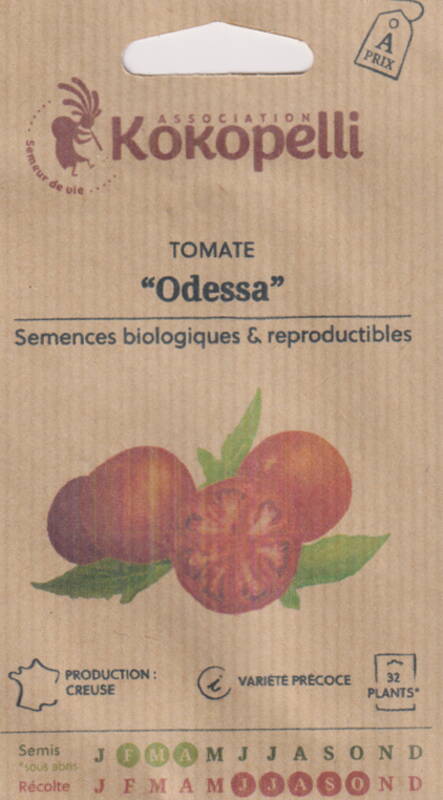
Tomato "Odessa".
Early, heat-tolerant, and incredibly productive!
This early-ripening determinate variety is well-adapted to dry and hot growing conditions. Thanks to its compact bush shape, it requires minimal maintenance while delivering an excellent harvest.
Characteristics:
* Plant: Determinate type (limited growth), 50–100 cm tall. Forms a neat, compact bush with regular foliage.
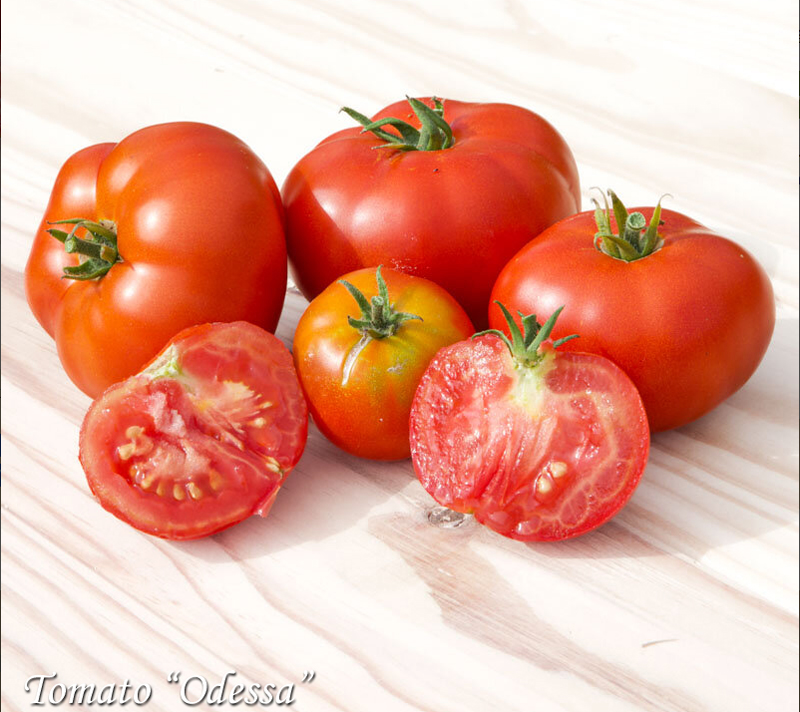
* Fruits: The plant yields 20 to 30 perfectly round, juicy tomatoes of a classic red color. Fruit weight is 120–180 g.
* Texture: The flesh is dense and meaty.
Culinary Use:
Thanks to its dense texture and rich flavor, this variety is ideal for processing: making thick sauces, tomato paste, juices, and French coulis (coulis).
HISTORICAL REFERENCE:
An heirloom variety originating from the city of Odesa in the former Ukraine.
Early, heat-tolerant, and incredibly productive!
This early-ripening determinate variety is well-adapted to dry and hot growing conditions. Thanks to its compact bush shape, it requires minimal maintenance while delivering an excellent harvest.
Characteristics:
* Plant: Determinate type (limited growth), 50–100 cm tall. Forms a neat, compact bush with regular foliage.
* Fruits: The plant yields 20 to 30 perfectly round, juicy tomatoes of a classic red color. Fruit weight is 120–180 g.
* Texture: The flesh is dense and meaty.
Culinary Use:
Thanks to its dense texture and rich flavor, this variety is ideal for processing: making thick sauces, tomato paste, juices, and French coulis (coulis).
HISTORICAL REFERENCE:
An heirloom variety originating from the city of Odesa in the former Ukraine.
Did you know that… unlike other vegetables, tomatoes can be preserved for future use by drying them in the sun rather than in artificial dehydrators.
To do this, medium-sized, dense, and meaty fruits are selected. They are cut into 4-6 wedges, leaving them connected at the top (stem end) of the fruit.
The tomatoes are placed cut-side up on wooden boards and set out in the sun.
You can also dry vegetables like carrots, having grated them first, as well as most leafy greens and culinary herbs.